
What Separates AV Support From Full Event Production?

Quick Answer: What Is the Difference Between AV Support and Event Production?
AV support typically focuses on providing and operating the technical equipment needed for a meeting or event.
Full event production goes further by coordinating audio, video, lighting, staging, rigging, content, presenters, rehearsals, show flow, venue requirements, and technical labor as one connected production plan.
The difference is not simply how much equipment is in the room. It is how much planning and coordination the event requires.

When Is Basic AV Support Enough?
Not every event needs a full-scale production environment.
A smaller executive meeting, breakout session, board meeting, training session, or simple presentation may only require microphones, displays, speakers, presentation playback, and technical support.
In these situations, a straightforward AV setup can provide exactly what the event needs without unnecessary production complexity.
The key is matching the technical approach to the event.

What Changes With Full Event Production?
Full event production begins when the individual technical elements need to function as one system.
Instead of asking only what microphones, screens, or lighting fixtures are required, the production team starts with questions about the audience, presenters, venue, schedule, content, brand, and overall attendee experience.
From there, the technical design is built around the event rather than around an equipment list.

Audio Becomes a Room-Wide System
For a simple meeting, audio may involve a few microphones and speakers.
For a large general session or corporate conference, audio becomes a complete coverage plan.
The production team has to consider audience size, room dimensions, presenter movement, panels, playback, audience Q&A, stage monitoring, wireless coordination, and how evenly sound reaches the entire room.
Clear audio is one of the most important parts of the attendee experience, even when attendees never think about the system behind it.

Video Becomes Part of the Audience Experience
Video production can quickly expand beyond displaying a presentation.
Large events may require LED walls, projection, multiple screens, presentation playback, graphics, cameras, IMAG, confidence monitors, timers, and video switching.
Screen size and placement also have to account for audience sightlines.
The goal is not simply to place a large screen onstage. It is to make sure every attendee can clearly follow the content and presenters from their seat.

Lighting Supports the Stage, Cameras, and Room
Event lighting does more than make the stage visible.
Lighting can establish focus, support presenters, improve camera images, reinforce branding, change the atmosphere of the room, and create different looks throughout the program.
For larger productions, lighting is designed alongside video, staging, scenic elements, and presenter movement rather than added at the end.

Staging and Scenic Design Shape the Environment
A stage is one of the primary visual elements attendees see throughout an event.
Its size, elevation, layout, scenic treatment, LED integration, furniture, lectern placement, and presenter access all affect the production plan.
Full event production considers how those elements work with the room, technical systems, audience, and content.
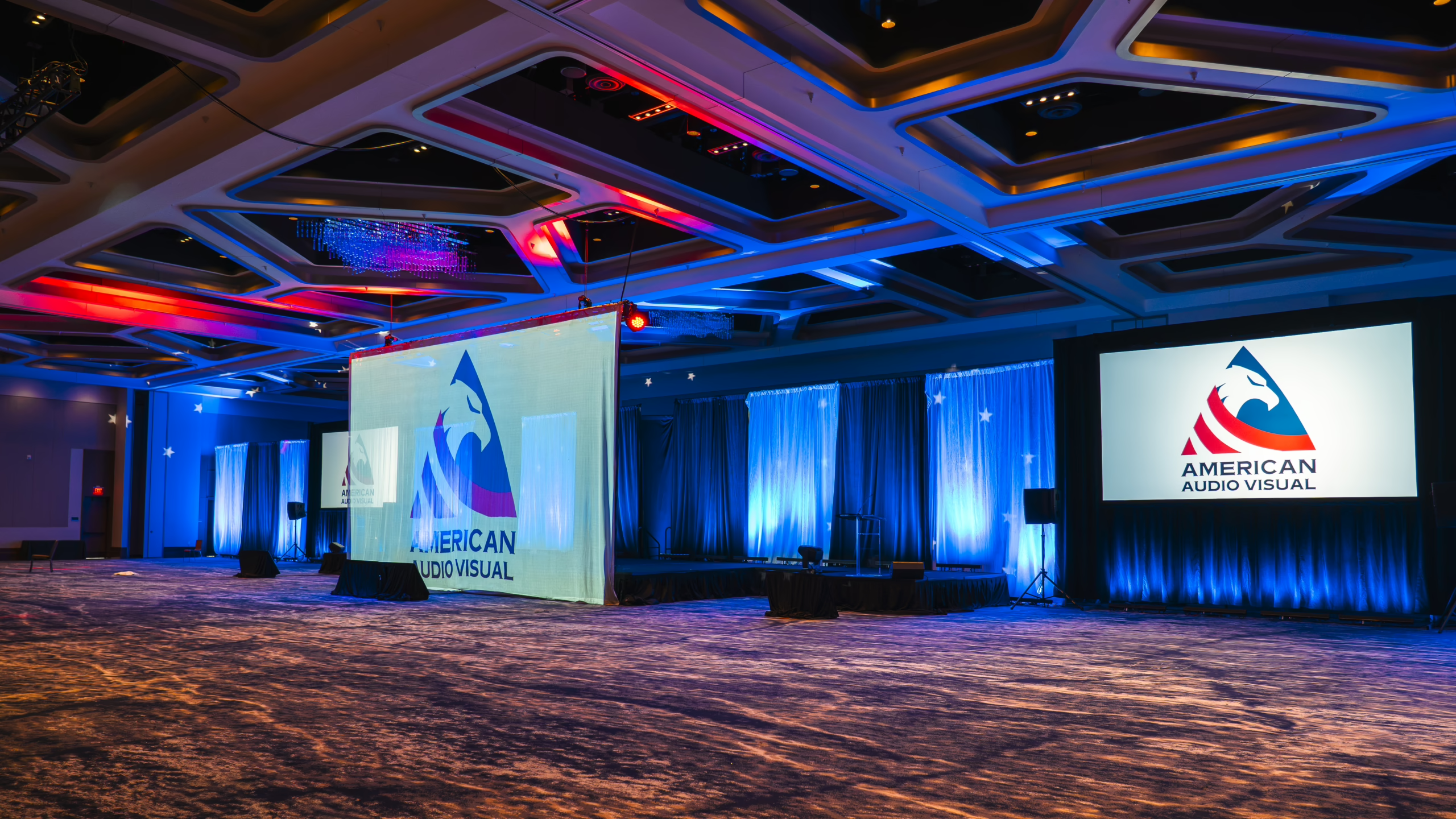
The result should feel like one event environment rather than separate pieces of equipment placed around a ballroom.

Rigging Connects the Production Above the Room
Flown LED, lighting, audio, truss, scenic elements, and signage may all depend on the venue’s available rigging structure.
That means the production team must coordinate equipment placement with hanging points, trim heights, weight limitations, sightlines, and venue requirements.
Rigging decisions can influence almost every other part of the event design.
From Technical Systems to a Coordinated Show

Presenters Need More Than a Microphone
High-visibility presenters often need additional support before and during the program.
That can include confidence monitors, countdown timers, teleprompters, presentation playback, walk-up music, lighting cues, microphone changes, rehearsal time, stage management, and communication between technical departments.
Those details help presenters focus on the audience instead of the technology.

Rehearsals Turn the Technical Plan Into the Show
Equipment can be installed correctly and the event can still feel unpolished without rehearsal.
Rehearsals allow presenters and the production team to work through transitions, videos, lighting changes, walk-ups, microphone handoffs, camera shots, content, and timing before the audience enters.
For complex or high-visibility events, rehearsal is part of production—not an optional extra.

Show Flow Requires Coordination
During a live event, audio, video, lighting, cameras, playback, presenters, and stage activity may all need to respond to the same cue.
That coordination is what turns technical systems into a show.
Production management, communication systems, cueing, and a detailed run of show help each department understand what is happening next and how their role supports the moment.

When Does an Event Need Full Production?
Full event production becomes increasingly valuable when the event includes a large general session, multiple technical departments, executive presenters, cameras and IMAG, custom staging, LED systems, rigging, multiple rooms, rehearsals, complex content, tight show cues, or a high level of brand visibility.
A useful question is not simply, “How much AV do we need?”
It is:
How many elements have to work together for this event to succeed?

Why Planning and Integration Matter
Adding more equipment does not automatically create a better event.
The value of full event production comes from integration.
Audio should support the stage design. Video should support audience sightlines. Lighting should support presenters and cameras. Rigging should support the creative design. The run of show should connect every technical department.
When those decisions are made together, the production becomes more efficient, more cohesive, and easier for the client to manage.
What AAV Looks at When Building a Production Plan
At American Audio Visual, we start with the event rather than an equipment list.
Our team considers the audience, venue, agenda, presenters, room layout, content, stage design, audio coverage, video requirements, lighting, rigging, cameras, rehearsals, labor, load-in schedule, venue requirements, and show flow.
From there, we develop a production approach that supports the event goals while keeping the technical systems connected.
That is the difference between supplying AV and becoming part of the production team.
Explore AAV’s event production services and see them in action in our corporate event room transformation case study.